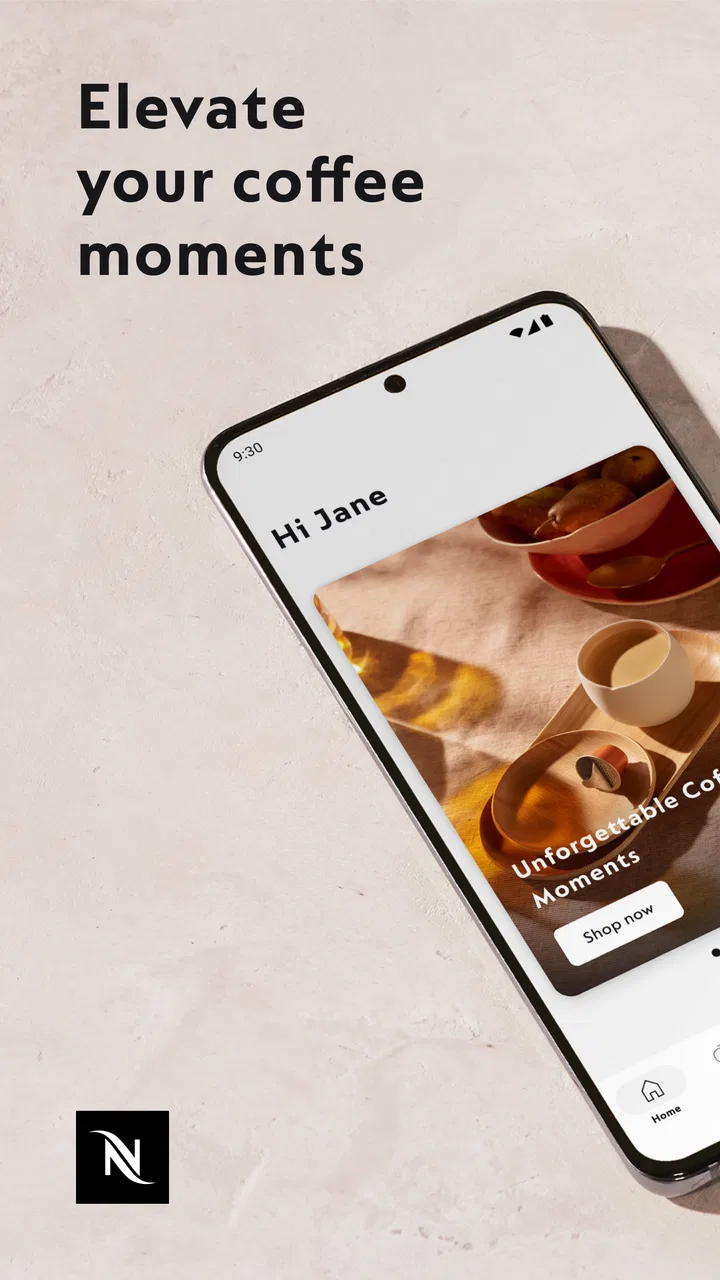
Nespresso Store
- 4.8
- Rating
- 1.00M
- Installs
- Free
- Price

 Analysis by App-foxy
I approached Nespresso Store as a practical shopping app rather than as a simple product catalogue. Its purpose is easy to understand: it brings the Nespresso buying experience onto a phone, so I can browse coffee, look through machine-related options, and place an order without opening a desktop browser. That sounds straightforward, but the quality of a shopping app depends on the small moments around the purchase: how quickly pages respond, how clearly products are presented, and how well the app behaves when my connection is less than perfect.
In my experience, this app makes the most sense for people who already use Nespresso machines or are considering one and want a direct way to manage their coffee shopping. It is free, aimed at Everyone, and comes from Nespresso itself. The Android release arrived on September 20, 2024, and the current version is 2.2.3, with Android 8.0 or later required. Those details make it accessible to many existing Android users, although the app is still most useful when you are already comfortable buying within the Nespresso ecosystem.
What the app feels like in everyday shopping
The strongest part of the experience is the sense of having a dedicated coffee shop in my pocket. Instead of searching the wider web and sorting through unrelated results, I can begin inside a space focused on Nespresso products. That narrower environment is helpful when I already know what I want, such as replenishing a familiar capsule selection, checking another coffee option, or reviewing machines before making a larger purchase.
You May Also Like

 Google Keep - Notes and lists
Google Keep’s Quiet Growth Shows the Appeal of Simpler Notes
As mobile work gets busier, Google Keep keeps winning a simple contest: capture a thought quickly, find it later, and get on with the day.

 Blood Strike: 2.5 Anniversary
Blood Strike’s Loadouts Turn Every Drop Into a Tactical Gamble
A close look at Blood Strike’s custom loadouts: how fast access to signature weapons reshapes its battle royale rhythm, rewards preparation, and narrows the gap between fights.

 Pandora - Music & Podcasts
Pandora’s Music Is Easy to Start, but Harder to Recover
Pandora’s strength is its low-effort path from a seed to a station. Its weak spot is how much confidence it asks you to place in connection, setup, and quiet recovery.

 8 Ball Pool
 Is Built on Rivalries, Rematches, and Routine
A close look at the rivalries, rematches, shared routines, and unanswered safety questions that turn a quick pool match into a persistent mobile community.

 Samsung Music
’s Quiet Strength Is Playing What You Already Own
Its reach comes less from spectacle than from dependable access to a personal library. That simplicity is both the app’s strongest retention engine and its ceiling.

 AccuWeather: Weather Radar
AccuWeather Review: A Quick, Clear Forecast for Everyday Decisions
For everyday plans, the best forecast is the one you can understand quickly. AccuWeather makes rain timing, radar, and local conditions easy to act on, with a few trade-offs.
More From Our News Desk



That focus is also the app’s main limitation. This is not a general marketplace where I can compare every coffee brand, capsule format, machine manufacturer, or delivery service in one place. The catalogue is tied to Nespresso, so users who want broad price comparison or compatibility across brands may find a retailer’s app more flexible. I would choose this app for direct Nespresso shopping, not for researching the entire coffee market.
The store has attracted a substantial audience, with more than a million installs and an average rating of 4.7 from roughly sixty thousand ratings. I see that as a useful sign that the basic shopping flow works for many people, though a strong rating cannot remove the need to check the details of an individual order before confirming it.
Where a stable connection matters most
Connectivity shapes nearly every meaningful part of this app. Browsing a catalogue, opening product information, checking availability, signing in, and moving through checkout are all activities I would treat as network-dependent. The app is not something I would open expecting a fully prepared shopping experience while travelling through a weak-signal area. Its value comes from retrieving current shop information, and that naturally requires a dependable connection.
A realistic example is my weekly coffee routine. I might notice that I am nearly out of capsules while preparing breakfast, open the app on home Wi-Fi, look through the products I usually buy, and continue to checkout. In that setting, the app feels more convenient than switching to a browser because the whole task begins in a purpose-built Nespresso environment. If I try the same thing in a basement, on a crowded train, or while moving between mobile towers, the experience becomes more dependent on loading speed and connection stability.
The difference is important because shopping apps often hide their network reliance until the user reaches a crucial step. A product image may load slowly, a product page may need to be refreshed, or checkout may take longer than expected. I recommend waiting for each screen to finish before tapping repeatedly. Multiple taps during a delay can create uncertainty about whether an action was accepted, especially around account or order controls.
The practical rule is simple: use the app when you have enough signal to verify each step, not merely enough signal to launch it. That habit reduces confusion and makes it easier to distinguish a genuine checkout problem from a temporary loading delay.
Using it on a phone instead of a desktop
A phone changes the way I shop. On a larger screen, it is easier to compare several product pages at once, keep notes open, or inspect a long list without scrolling as much. The mobile format is better suited to quick, focused purchases: checking a familiar item, browsing during a break, or ordering before I forget. I would not necessarily use it for a long coffee-machine research session if I wanted to compare many models side by side.
The app is particularly convenient for repeat buyers who already understand their machine and preferred coffee style. They do not need to rediscover the entire range every time. They can use a short shopping session to replenish supplies rather than treating each purchase as a research project. For a new buyer, however, I would slow down and read product information carefully instead of relying on attractive images or a familiar-looking capsule name.
One useful mobile habit is to decide what I am trying to accomplish before opening the app. If I want a quick reorder, I can move directly toward that goal. If I am exploring machines, accessories, and coffee together, I should expect more scrolling and more opportunities to lose track of what I have already considered. A small screen encourages fast decisions, but coffee purchases are not always interchangeable, particularly when the machine format matters.
Another trade-off is typing. Entering account details, delivery information, or search terms on a phone is less comfortable than using a physical keyboard. I would avoid doing a detailed order while distracted or in a hurry. The app makes mobile shopping possible, but it does not make careful checking unnecessary.
What happens when loading fails
Every connected shopping app eventually meets a poor connection, and this is where my expectations become more cautious. If a page does not load, I would first check whether other apps can reach the internet, then move between Wi-Fi and mobile data if appropriate, and reopen the affected screen. I would not immediately assume that an order failed simply because the interface paused.
The most important recovery step is checking the order state before trying again. Repeating the final action too quickly can create doubt about duplicate submissions. I prefer to pause, revisit the account or order area when available, and look for confirmation before starting a second checkout. This is a small but important difference between casual browsing and a purchase that involves delivery details and payment.
If the app closes or the connection disappears during browsing, I would treat the cart as something to verify rather than something to trust blindly. Products, availability, and checkout details can change while the app is reconnecting. Reopening the app and reviewing the basket from the beginning may feel slower, but it is safer than assuming every earlier selection remains exactly as intended.
This recovery approach also explains why I would not use the app as my only reference while offline. I would make the purchase once the connection is reliable, then keep any confirmation information available through the normal account or order process. The app’s central role is active shopping, not acting as a static coffee notebook.
Managing mobile data without making shopping difficult
For occasional purchases, I would normally use Wi-Fi when it is convenient, especially if I plan to browse many product pages. A catalogue with images can be more demanding than a simple text-based order form, and mobile data can be less predictable in busy areas. I do not need to turn shopping into a technical exercise, but choosing a stable connection makes the experience more consistent.
My data-conscious workflow would be to decide whether I am browsing or buying before I begin. Browsing invites more images, more product pages, and more time in the app. Buying a familiar item is a shorter task. If I am on a limited mobile plan, I would avoid opening every product page merely out of curiosity and would save detailed exploration for Wi-Fi.
I would also avoid switching networks during checkout. Moving from Wi-Fi to mobile data at the wrong moment can make a page appear stalled and can leave me uncertain about whether the previous action completed. Staying on one reliable connection until the purchase is clearly finished is a more useful precaution than repeatedly refreshing the screen.
There is a broader privacy and convenience trade-off here. A dedicated shopping app can feel more direct than a browser because the experience is focused on one brand, but I still need to be comfortable using a shopping account and handling personal order information on my phone. Anyone sharing a device should be mindful of which account is active before placing an order. That is not a reason to avoid the app, but it is a reason to slow down at the account stage.
Who will get the most from it
I think this app is a good match for an existing Nespresso customer who values a direct, repeatable shopping routine. If my machine is already part of my daily life and I want to buy coffee from the developer rather than compare multiple retailers, the focused catalogue is an advantage. The free price also removes a separate app cost, making it easy to try without committing to a subscription.
It is also useful for someone who wants to investigate Nespresso machines from a phone before visiting a store or making a purchase. The app gives that person a brand-specific starting point. I would still encourage careful attention to compatibility and product details, because a polished mobile presentation should not replace understanding which machine and coffee format fit the intended routine.
The age rating of Everyone makes the app broadly approachable, but that does not mean every shopping decision is equally simple. A first-time buyer may need more time than a regular customer, particularly if the range feels unfamiliar. The app helps with access; it cannot make personal taste, machine choice, or household consumption patterns disappear.
Who should choose another shopping route
I would look elsewhere if my priority were comparing several coffee brands in one basket, finding the lowest price across different sellers, or buying compatible products from a wide range of manufacturers. A general retailer may be better for that kind of comparison. The Nespresso Store is intentionally narrower, and that narrowness is either its strength or its weakness depending on the task.
I would also hesitate to rely on it for shopping in places where my connection is regularly unreliable. Since the useful parts of the experience depend on current online content and account activity, a poor signal can turn a quick purchase into a frustrating sequence of reloads. In that situation, a desktop connection or a physical shop may offer more confidence.
Finally, people who dislike shopping through a brand-specific account environment may prefer a retailer they already use. The app is designed around Nespresso’s own shopping relationship, so it suits users who are comfortable with that arrangement. It is less compelling for someone who wants one neutral place to manage all household purchases.
Small habits that improve the experience
I found that the best results come from treating the app as a focused task tool. Before browsing, I would identify the machine or coffee format I need, decide whether I am replenishing or exploring, and make sure I am using the correct account. This prevents a short purchase from becoming an unfocused scroll through the catalogue.
For repeat orders, I would review the basket as if I were checking a handwritten shopping list: product, quantity, machine suitability, delivery information, and final confirmation. The convenience of mobile ordering can encourage automatic habits, and that is exactly when an old selection or an unintended quantity can slip through unnoticed.
For exploration, I would compare products based on the information shown in their individual pages rather than judging them only by capsule colour or a brief name. I would also avoid making a rushed choice while commuting. A phone is excellent for access, but a calm moment is better for decisions that affect how I will drink coffee every morning.
One less obvious advantage of a dedicated app is mental separation. When I shop through a general browser, unrelated tabs, advertisements, and other retailers can pull me away from the original task. Here, the narrower environment can reduce distractions. The trade-off is that it also reduces comparison, so I would use the app for convenience and a broader source when I genuinely need market-wide research.
My connectivity verdict
After looking at the whole experience, I see Nespresso Store as a convenient mobile companion for direct Nespresso shopping, not as a universal coffee marketplace or an offline reference tool. Its success depends on the quality of the connection at the moments that matter: loading products, maintaining the basket, signing in, and completing checkout. When the network is steady, the focused approach saves time. When the network is weak, patience and verification become part of the shopping process.
The app’s 4.7 average and large installed audience suggest that it has earned strong approval from many users, while its developer, Nespresso, gives the experience a clear brand connection. The current version, 2.2.3, supports Android 8.0 and newer, which keeps it available to a wide range of phones. I would still judge it by my needs rather than by popularity alone.
My recommendation is positive for regular Nespresso customers who want a free, brand-specific way to shop from a phone. I would use it on a stable connection, check every order carefully, and switch to a general retailer or desktop browser when comparison or a larger research workspace matters more than convenience. For quick, connected Nespresso purchases, it is a sensible app; for broad coffee shopping, its focused design is the very reason to look elsewhere.
FAQs for Nespresso Store
01What features does the Nespresso Store app offer?
The Nespresso Store app provides a seamless shopping experience for coffee lovers. Users can browse a wide range of coffee capsules, machines, and accessories. The app also offers personalized recommendations, order tracking, and exclusive promotions. Additionally, users can quickly reorder their favorite products and locate the nearest Nespresso boutique.
02Is the Nespresso Store app available for both Android and iOS?
Yes, the Nespresso Store app is available for both Android and iOS devices. Users can download it from the Google Play Store for Android and the Apple App Store for iOS. The app is designed to provide a user-friendly experience on both platforms, ensuring access to all features and services.
03Are there any costs associated with using the Nespresso Store app?
Downloading and using the Nespresso Store app is free. However, purchasing products such as coffee capsules, machines, or accessories will incur costs. The app occasionally offers exclusive discounts and promotions, allowing users to save on their purchases. Keep an eye on notifications for special deals.
04How does the Nespresso Store app ensure the security of my personal information?
The Nespresso Store app prioritizes user security by employing advanced encryption technologies to protect personal information and payment details. Regular updates enhance security protocols, and users are encouraged to create strong passwords. Nespresso’s privacy policy provides detailed information about data protection practices.
05Can I track my orders through the Nespresso Store app?
Yes, the Nespresso Store app allows users to track their orders conveniently. Once a purchase is made, users can view the order status and estimated delivery date. Notifications are sent to keep users updated on any changes, ensuring a transparent and efficient shopping experience.
Pros
- User-friendly interface for easy navigation.
- Wide variety of coffee products available.
- Convenient order tracking feature.
- Exclusive member discounts and offers.
- Integrated with smart appliances for seamless use.
Cons
- Limited payment options available.
- Requires stable internet for optimal use.
- Occasional app crashes reported by users.
- Subscription management can be confusing.
- Some features locked behind membership.

Nespresso Store
Gallery